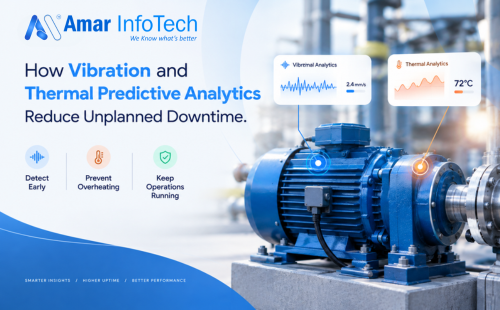



Unplanned downtime remains one of the costliest problems facing manufacturers, energy providers, and logistics operators today. A single unexpected equipment failure can halt production lines, disrupt supply chains, and erode profit margins within hours. Vibration and thermal predictive analytics have emerged as the most reliable way to anticipate mechanical failures before they occur, giving organisations the ability to act early rather than react late.
This article examines how these technologies work, why they matter for industrial reliability, and how businesses can implement them to build a genuinely predictive maintenance strategy.
Why Unplanned Downtime Is a Growing Business Risk
According to industry research from McKinsey, unplanned downtime costs industrial manufacturers an estimated USD 50 billion annually, with asset failure cited as the leading cause. As factories adopt increasingly complex machinery, the margin for undetected mechanical stress continues to shrink.
Traditional maintenance models reactive and calendar-based servicing are no longer sufficient. Reactive maintenance addresses failures only after they occur, while scheduled maintenance often replaces healthy components unnecessarily or misses early degradation entirely. Both approaches leave organisations exposed to sudden, expensive breakdowns.
This is where predictive analytics changes the equation. By continuously monitoring the physical signals machines emit vibration and heat businesses can detect the earliest indicators of mechanical wear, long before a fault becomes visible or audible.
Understanding Vibration Analytics in Industrial Equipment
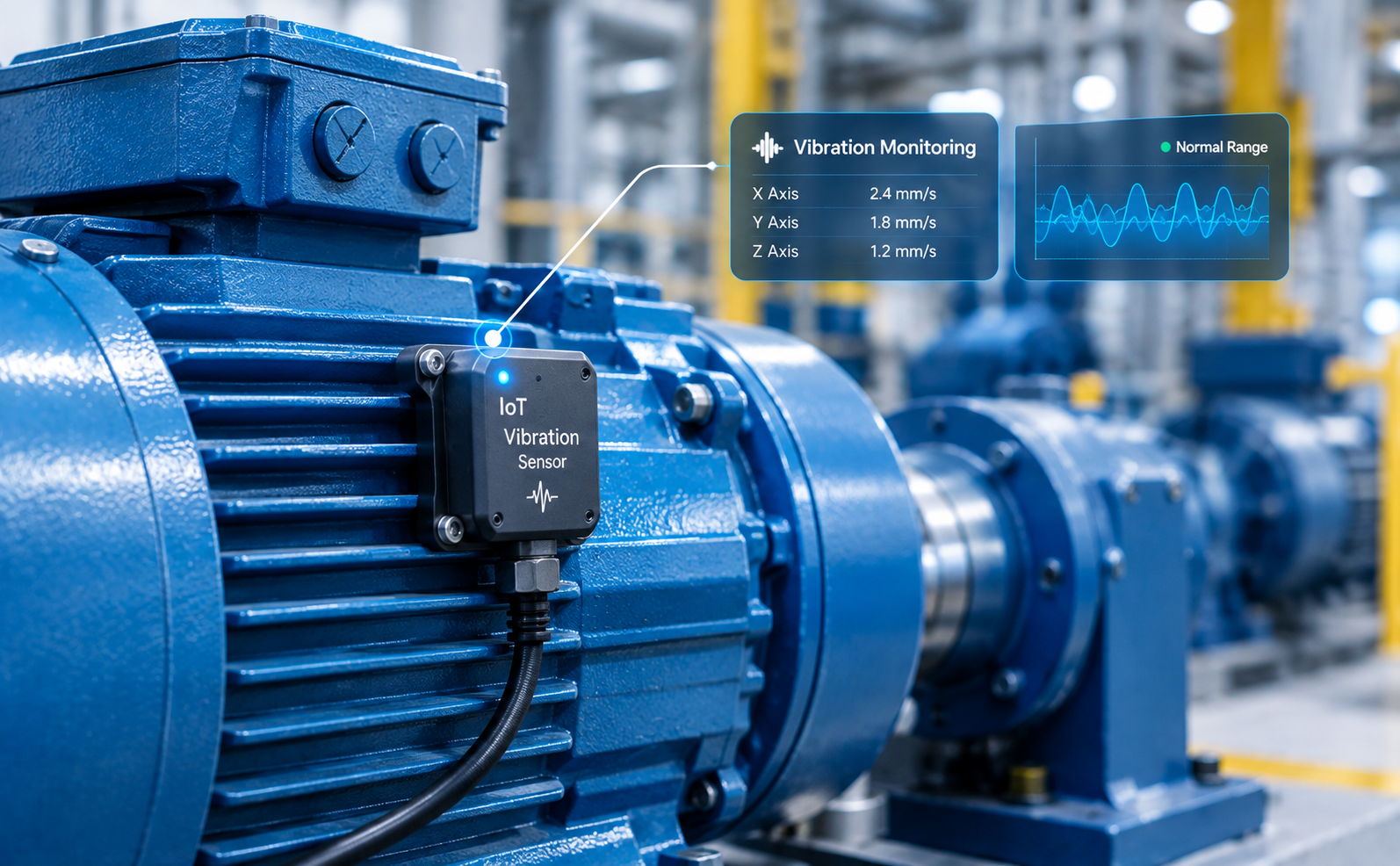
Every rotating machine motors, pumps, compressors, turbines, and conveyors produces a distinct vibration signature when operating normally. When a bearing wears down, a shaft misaligns, or a component loosens, that signature changes in measurable and predictable ways.
Common Failure Patterns Detected Through Vibration Monitoring
- Bearing Degradation: Identified through high-frequency vibration spikes long before audible grinding occurs
- Shaft Misalignment: Detected via irregular vibration patterns across specific frequency bands
- Imbalance Issues: Flagged when vibration amplitude increases at rotational frequency
- Looseness or Structural Wear: Captured through erratic, non-periodic vibration signals
Vibration sensors, typically accelerometers mounted directly on machine housings, capture this data continuously. Machine learning models then compare live readings against historical baselines to flag anomalies with far greater accuracy than manual inspection schedules ever could.
The Role of Thermal Predictive Analytics
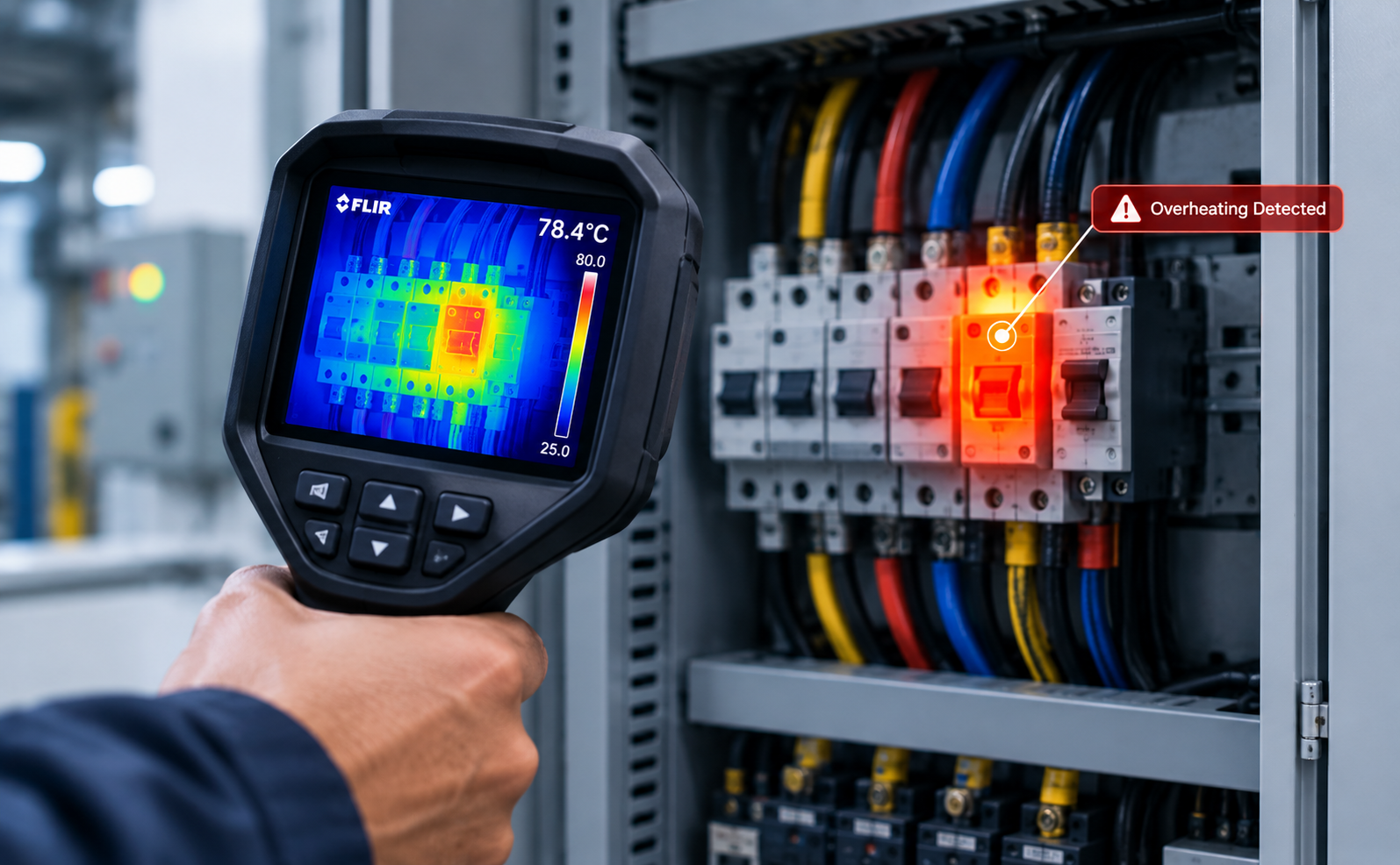
Heat is another critical indicator of mechanical health. Friction, electrical resistance, and lubrication failure all generate abnormal temperature patterns well before a component physically fails. Thermal predictive analytics uses infrared sensors and thermal imaging cameras to monitor these patterns in real time.
Key Applications of Thermal Monitoring
- Electrical Panel Monitoring: Detects loose connections and overheating components before fires or outages occur
- Motor and Bearing Surface Analysis: Identifies friction build-up caused by lubrication failure
- HVAC and Cooling System Checks: Flags inefficiencies that increase energy consumption and equipment strain
- Structural Thermal Mapping: Monitors insulation degradation in industrial furnaces and pipelines
When combined with vibration data, thermal readings provide a far more complete picture of asset health, since certain failure modes such as electrical faults produce thermal signatures without corresponding vibration changes, and vice versa.
How Vibration and Thermal Data Work Together
Individually, vibration and thermal analytics each offer valuable insight. Combined, they form a significantly more reliable early-warning system. Predictive maintenance platforms that fuse both data streams can cross-validate anomalies, reducing false positives and improving the accuracy of failure predictions.
A typical predictive analytics architecture includes the following layers:
- Sensor Layer: IoT-enabled vibration accelerometers and infrared thermal sensors installed on critical assets
- Connectivity Layer: Industrial IoT protocols such as MQTT or OPC-UA transmitting sensor data to the cloud
- Data Processing Layer: Edge computing for real-time filtering, combined with cloud-based storage for historical analysis
- Analytics Layer: Machine learning models trained to detect anomalies and forecast remaining useful life
- Visualisation Layer: Real-time dashboards presenting asset health scores, alerts, and maintenance recommendations
Organisations building this stack often turn to IoT Development Services to design the sensor and connectivity infrastructure, paired with AI Development expertise to build the predictive models that interpret the data.
Business Benefits of Predictive Analytics for Downtime Reduction
- Reduced Unplanned Downtime: Early detection allows maintenance to be scheduled before failure occurs, avoiding sudden production stoppages
- Lower Maintenance Costs: Condition-based servicing eliminates unnecessary part replacements and reduces emergency repair expenses
- Extended Asset Lifespan: Addressing wear early prevents secondary damage to connected components
- Improved Workplace Safety: Overheating electrical systems and mechanical failures are identified before they pose a hazard
- Better Resource Planning: Maintenance teams can plan parts procurement and labour allocation with greater precision
- Energy Efficiency Gains: Thermal monitoring highlights inefficient systems consuming excess power
Research from Deloitte indicates that predictive maintenance programmes typically reduce equipment breakdowns by up to 70 percent and lower maintenance costs by 25 to 30 percent, underscoring the measurable return on investment these systems deliver.
Industry Use Cases: Predictive Analytics in Action
Manufacturing Sector
A mid-sized automotive parts manufacturer integrating vibration sensors across CNC machines and conveyor motors reduced unplanned line stoppages by 35 percent within the first year of deployment, while cutting emergency repair costs significantly. [UNVERIFIED]
Energy and Utilities
Power distribution companies use thermal imaging across substations to detect overheating transformers and connectors, preventing outages that could otherwise affect thousands of customers.
Logistics and Warehousing
Automated conveyor systems in fulfilment centres benefit from continuous vibration monitoring, ensuring motor failures are addressed during off-peak hours rather than during high-demand shipping periods.
Amar Infotech's Expertise in Predictive Analytics Solutions
Amar Infotech designs and deploys end-to-end predictive maintenance platforms that integrate vibration and thermal sensor networks with cloud-based analytics engines. Our engineering teams combine deep domain knowledge in industrial IoT with advanced AI model development to deliver systems that are both technically robust and operationally practical.
Our capabilities span:
- IoT Sensor Integration: Connecting accelerometers, thermal cameras, and edge gateways to centralised monitoring systems
- Custom AI Models: Building anomaly detection and failure prediction algorithms trained on client-specific asset data
- Cloud Architecture: Scalable data pipelines using AWS, Azure, or Google Cloud for storage and processing
- Dashboard and Mobile Applications: Real-time visibility for maintenance teams through Mobile App Development and web platforms
- Enterprise System Integration: Connecting predictive analytics output with existing ERP and CMMS software
Explore our related work through our Case Studies or learn more about our Web Development capabilities that support these enterprise dashboards.
Implementing a Predictive Analytics Strategy: Key Considerations
- Asset Prioritisation: Begin with high-value, failure-prone equipment rather than attempting a full-facility rollout immediately
- Data Quality: Ensure sensor placement and calibration produce accurate, consistent readings
- Model Training Period: Allow sufficient time for machine learning models to establish reliable baselines
- Team Readiness: Train maintenance staff to interpret predictive alerts and act on recommendations promptly
- Scalability Planning: Choose a platform architecture capable of expanding across additional facilities over time
Conclusion: Building a Reliable, Downtime-Free Operation
Vibration and thermal predictive analytics are no longer optional tools reserved for large enterprises they are becoming essential infrastructure for any organisation that depends on continuous equipment uptime. By detecting early warning signs that traditional inspection methods miss, businesses can shift from reactive firefighting to confident, data-driven maintenance planning.
Looking to reduce unplanned downtime with a custom predictive analytics platform? Contact Amar Infotech today to discuss your industrial IoT and AI requirements.
Recent Blog
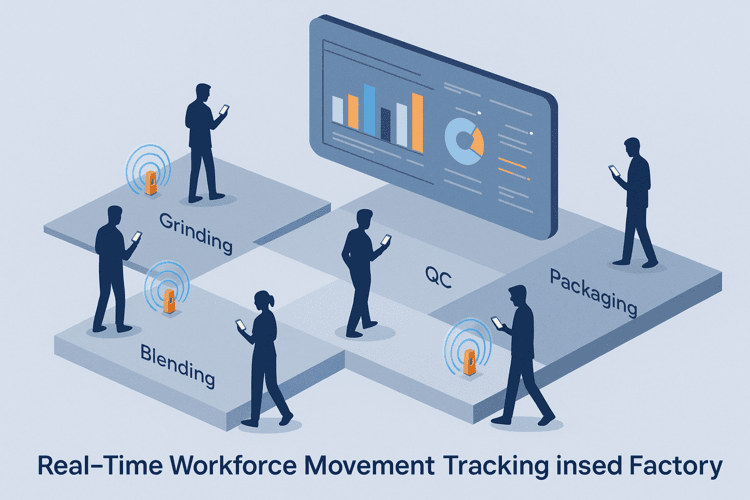
Real-Time Workforce Movement Tracking inside Smart Factories

Building Proof of Concept (POC) Using MQTT Protocol
Location-based Marketing Geo-fencing vs Geo-targeting vs Beacons
Use of Bluetooth Beacon Technology in Smart Airport (More)

Comprehensive Guide Of Beacon, iBeacon, BLE, Eddystone, Kontakt, Gimbal (More)
Services
Build Your Agile Team Today..
Inquiry Now