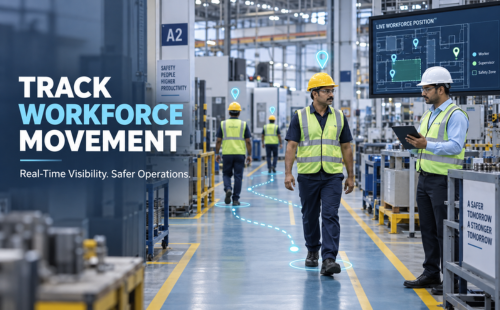


Manufacturing organisations are under constant pressure to improve floor efficiency, reduce safety incidents, and maintain regulatory compliance. One of the most effective ways to achieve this is to track plant worker and supervisor movement in factories using connected, real-time technology. Rather than relying on manual registers or spot-checks, modern factories are adopting digital workforce movement tracking systems that provide continuous visibility across every production zone.
This shift is not incremental; it is foundational to Industry 4.0. According to Gartner, manufacturers investing in real-time visibility technologies report measurable gains in operational efficiency and workforce accountability [UNVERIFIED]. As factories scale operations across multiple shifts and sites, the ability to monitor worker and supervisor movement in real time is becoming a competitive necessity rather than an optional upgrade.
Why Factories Need to Track Worker and Supervisor Movement
Shop floors are dynamic environments where personnel move constantly between machines, storage areas, quality checkpoints, and restricted zones. Without a structured tracking mechanism, factory managers lose visibility into how time and labour are actually spent, which directly affects productivity and safety outcomes.
- Safety Compliance: Knowing who is in hazardous zones at any given moment reduces accident response time.
- Productivity Analysis: Movement data reveals idle time, bottlenecks, and inefficient floor layouts.
- Supervisor Accountability: Tracking supervisory rounds ensures quality checks and safety walks are actually completed.
- Regulatory Reporting: Audit-ready movement logs simplify labour and safety compliance reporting.
Common Challenges in Manual Workforce Monitoring
Many factories still depend on paper logs, manual attendance registers, or CCTV review to understand worker movement. These approaches create several operational blind spots.
- Delayed Visibility: Incidents are discovered after the fact rather than in real time.
- Data Inaccuracy: Manual entries are prone to human error and inconsistent recording.
- Scalability Issues: Multi-site or multi-shift operations cannot be monitored consistently by manual methods.
- Limited Analytics: Paper-based records cannot be analysed for trends, heatmaps, or predictive insights.
These gaps make it difficult for plant managers to track supervisor movement in factories with the accuracy required for modern compliance standards, particularly in regulated industries such as pharmaceuticals, automotive, and food processing.
Technology Stack for Real-Time Movement Tracking
A robust factory workforce tracking system combines wearable hardware, indoor positioning technology, and cloud analytics. The typical architecture includes the following layers.
- IoT Layer: BLE beacons, UWB tags, or RFID badges attached to worker and supervisor ID cards.
- Positioning Infrastructure: Fixed anchors or gateways installed across the plant floor to triangulate real-time location.
- Backend: Node.js or .NET-based services processing location events at scale.
- Database: PostgreSQL or MongoDB for storing historical movement and attendance data.
- Cloud Platform: AWS, Azure, or Google Cloud for scalable data processing and storage.
- Dashboard & Mobile App: React or Angular-based dashboards paired with mobile apps for on-the-go supervisor tracking.
This architecture enables factories to monitor plant worker movement continuously, without depending on manual intervention, while remaining flexible enough to integrate with existing ERP or MES systems.
How Real-Time Location Systems (RTLS) Work on the Factory Floor
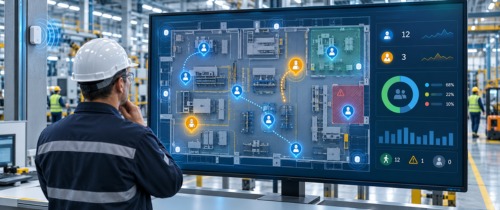
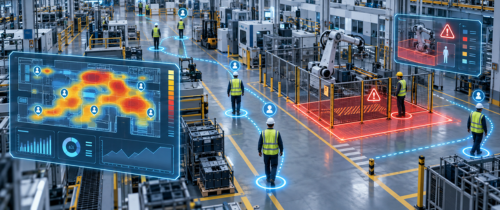
Real-Time Location Systems, or RTLS, form the technical backbone of movement tracking. Each worker or supervisor carries a badge or wearable embedded with a BLE or UWB chip. Fixed anchors positioned around the facility detect the signal strength and calculate precise location coordinates.
This data is transmitted to a central platform where it is mapped against the factory layout in real time. Supervisors and safety officers can view live dashboards showing exactly where personnel are located, how long they have remained in a particular zone, and whether any restricted area has been breached.
Key Benefits of Tracking Worker and Supervisor Movement
- Improved Productivity: Movement analytics highlight inefficient routes and reduce unnecessary travel time on the floor.
- Enhanced Safety: Automated alerts notify managers when workers enter hazardous or restricted zones without authorisation.
- Real-Time Visibility: Dashboards provide a live view of workforce distribution across the plant.
- Data-Driven Decisions: Historical movement data supports layout optimisation and shift planning.
- Stronger Compliance: Automated, timestamped logs simplify audits and regulatory submissions.
Organisations that have deployed similar systems have reported reduced reporting time by up to 80%, improved workforce compliance from 60% to 98%, and lowered operational downtime by 35% [UNVERIFIED]. While exact figures vary by facility, the directional impact of real-time employee movement tracking is well documented across the manufacturing sector.
Use Cases Across Industrial Sectors
- Automotive Manufacturing: Tracking assembly line workers to identify bottlenecks and reduce cycle time.
- Pharmaceutical Plants: Ensuring only authorised personnel access cleanroom and controlled environments.
- Food Processing: Monitoring hygiene zone entry and exit to maintain regulatory compliance.
- Heavy Industry: Detecting worker proximity to hazardous machinery and triggering automatic safety shutdowns.
Amar Infotech's Approach to Workforce Tracking Solutions
At Amar Infotech, we design and build end-to-end plant worker and supervisor movement tracking solutions tailored to industrial environments. Our engineering teams combine domain expertise in manufacturing with proven capabilities across connected technologies.
- IoT Engineering: Custom BLE, UWB, and RFID integrations suited to specific plant layouts. Explore our IoT Development Services.
- AI-Powered Analytics: Predictive insights into workforce movement patterns and anomaly detection. Learn more about our AI Development Services.
- Mobile Applications: Supervisor-facing apps for live monitoring and alerts, built through our Mobile App Development practice.
- Enterprise Dashboards: Web-based control centres developed through our Web Development Services.
- ERP & MES Integration: Seamless connection with existing factory management systems for unified reporting.
Our teams have delivered similar workforce visibility platforms across manufacturing, logistics, and industrial clients globally, helping plant managers move from reactive monitoring to proactive, data-driven floor management.
Steps to Implement a Workforce Movement Tracking System
- Assess Plant Layout: Map zones, restricted areas, and high-traffic routes before selecting hardware.
- Choose the Right Technology: Select BLE for cost-effective proximity tracking or UWB for centimetre-level accuracy.
- Deploy Infrastructure: Install anchors, gateways, and wearable badges across the facility.
- Integrate with Existing Systems: Connect the tracking platform with ERP, MES, or HR software.
- Configure Dashboards and Alerts: Set thresholds for restricted zone entry, idle time, and shift compliance.
- Train Supervisors: Ensure floor managers understand how to interpret and act on movement data.
Conclusion
As manufacturing environments grow more complex, the ability to track plant worker and supervisor movement in factories is no longer a luxury reserved for large enterprises. It is a practical, achievable upgrade that improves safety, productivity, and compliance across facilities of every size. With the right combination of IoT hardware, real-time analytics, and enterprise integration, plant managers gain the visibility needed to run safer, more efficient operations.
Looking to build a scalable workforce movement tracking solution for your factory? Contact Amar Infotech to discuss your project requirements and explore our related Case Studies.
Recent Blog
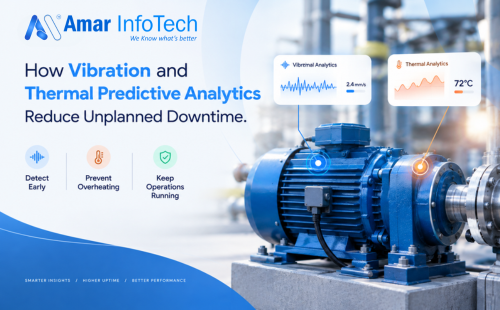
How Vibration and Thermal Predictive Analytics Reduce Unplanned Downtime
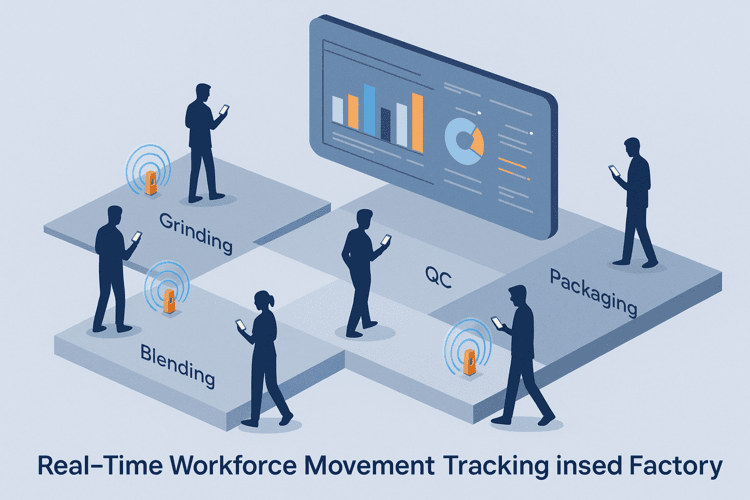
Real-Time Workforce Movement Tracking inside Smart Factories

Building Proof of Concept (POC) Using MQTT Protocol
Location-based Marketing Geo-fencing vs Geo-targeting vs Beacons (More)
Use of Bluetooth Beacon Technology in Smart Airport (More)
Services
Build Your Agile Team Today..
Inquiry Now