



Introduction: When Getting a Visa Takes Less Time Than Brewing Coffee
Imagine applying for a travel visa and receiving approval before your coffee finishes brewing. That is no longer a futuristic fantasy it is rapidly becoming a reality in several countries around the world. The concept of a 3-minute visa process is reshaping how governments, travelers, and immigration consultants think about border control and international travel documentation.
For decades, the traditional visa application process meant long queues, mountains of paperwork, embassy appointments weeks in advance, and agonizing wait times that could stretch from days to months. Today, thanks to breakthroughs in artificial intelligence, biometric verification, and blockchain-based document authentication, some nations are processing visa applications in under three minutes.
But is this lightning-fast visa approval truly the future? And what are the trade-offs? Let us explore the technology, the countries leading the charge, and what it means for the global immigration landscape.
What Exactly Is the 3-Minute Visa Process?
The 3-minute visa process refers to an automated, AI-powered immigration system that can evaluate a traveler's application, cross-check databases, verify identity, assess risk levels, and issue a digital visa all within 180 seconds or less.
Unlike conventional systems that rely on manual review by immigration officers, the automated visa processing system uses a combination of:
- Machine learning algorithms that analyze applicant profiles against millions of historical data points.
- Biometric scanning including facial recognition and fingerprint matching integrated with passport chips.
- Real-time database cross-referencing with Interpol watchlists, travel history, and national security databases.
- Blockchain document verification to instantly authenticate passports, financial records, and supporting documents.
- Risk-scoring engines that assign applicants a probability score based on hundreds of variables.
Countries like the United Arab Emirates, Estonia, and New Zealand have pioneered versions of this model, with their e-visa platforms delivering approvals in record time for pre-screened, low-risk travelers.
Which Countries Are Leading the Digital Visa Revolution?
1. United Arab Emirates - The Gold Standard in Smart Immigration
The UAE has invested heavily in smart border technology. Its digital visa application system processes tourist visas in as little as 15 minutes on average, with the fastest approvals recorded under 5 minutes for repeat visitors. The integration of AI-powered identity verification with its national ID infrastructure has made the UAE a global benchmark for efficient immigration services.
2. Estonia - The Pioneer of Digital Governance
Known as the world's most digitally advanced country, Estonia's e-Residency program and digital nomad visa processing infrastructure have set global standards. The country's X-Road data exchange platform connects government databases seamlessly, enabling near-instant visa decision-making with minimal human intervention.
3. New Zealand - NZeTA and Automated Entry Clearance
New Zealand's New Zealand Electronic Travel Authority (NZeTA) is processed almost entirely by automated systems, with the majority of low-risk applicants receiving decisions in under 72 hours and in many cases, under an hour. The system uses predictive analytics to identify low-risk travelers and fast-track their approvals automatically.
4. India - Scaling e-Visa Technology for Millions
India's e-Visa system now serves over 160 nationalities and processes applications using AI document validation tools. While average processing times are around 72 hours, the infrastructure is being upgraded toward real-time visa issuance for priority corridors.
How AI and Automation Make the 3-Minute Visa Possible
The backbone of any instant visa processing system is its data infrastructure. Here is a step-by-step breakdown of what happens in those three minutes:
- Step 1 - Digital Application Submission: The applicant fills out an online visa application form, uploads their passport, photograph, and any supporting documents through a secure portal or mobile app.
- Step 2 - Biometric & Document Verification: The system instantly scans the uploaded passport using Optical Character Recognition (OCR) and cross-checks the biometric chip data against global databases.
- Step 3 - AI Risk Assessment: The machine learning model assigns a travel risk score based on nationality, travel history, financial records, and other variables without human intervention.
- Step 4 - Database Cross-Reference: The system simultaneously queries Interpol databases, national watchlists, health authority records (post-pandemic), and prior visa refusals to flag any concerns.
- Step 5 - Automated Decision & Issuance: If no red flags are raised, the digital visa is automatically generated, cryptographically signed, and delivered to the applicant's email or stored in the national e-visa portal.
The entire pipeline is powered by cloud computing infrastructure, allowing it to handle thousands of simultaneous applications without degradation in speed or accuracy.
Key Benefits of Fast Visa Processing for Travelers and Governments
For Travelers
- Reduced anxiety and uncertainty around travel planning.
- Ability to make last-minute travel decisions without visa constraints.
- Elimination of embassy queues and in-person appointment requirements.
- Access to real-time visa status updates via mobile apps.
- Greater travel flexibility for business travelers and digital nomads.
For Governments and Immigration Authorities
- Significant reduction in administrative costs and staffing requirements.
- Improved border security through consistent, unbiased AI screening.
- Ability to process higher visa volumes during peak travel seasons.
- Enhanced data collection and analytics for policy decisions.
- Stronger integration with international security databases.
Challenges and Concerns Around Automated Visa Systems
While the promise of a 3-minute visa process is compelling, it is not without significant challenges:
Data Privacy and Security Risks
Collecting and processing sensitive biometric data, passport details, and financial records at scale raises serious concerns about data breaches and unauthorized access. Governments must invest in military-grade cybersecurity to protect applicant data.
Algorithmic Bias in AI Decision-Making
AI-driven visa decisions are only as fair as the data they are trained on. If historical immigration data contains patterns of discrimination and much of it does the automated system risks perpetuating or amplifying those biases, disproportionately affecting applicants from certain countries or backgrounds.
Digital Divide and Accessibility Issues
Not every applicant has access to a smartphone, high-speed internet, or the digital literacy required to navigate an online visa portal. For aging populations or applicants in low-connectivity regions, a fully digital system can create new barriers to access.
Lack of Human Oversight in Edge Cases
Complex cases such as humanitarian visa applications, asylum seekers, or travelers with incomplete documentation still require human judgment. Over-relying on automated systems for these cases can result in wrongful denials with no clear appeals process.
Is the 3-Minute Visa Process Truly the Future of Immigration?
The evidence strongly suggests yes but with important caveats. The future of immigration services will likely be a hybrid model where:
- Low-risk, frequent travelers with clean records enjoy near-instant automated visa approvals.
- Medium-risk applicants receive AI-assisted pre-screening followed by rapid human review within hours.
- High-risk or complex cases continue to undergo thorough manual investigation by trained immigration officers.
Organizations like the International Air Transport Association (IATA) and the World Economic Forum have already published roadmaps for a Seamless Traveler Experience built on AI, biometrics, and digital identity frameworks. The global e-visa market is projected to exceed $50 billion by 2030, underscoring the enormous momentum behind this transformation.
Countries that fail to modernize their immigration infrastructure risk losing tourism revenue, foreign investment, and skilled talent to more agile competitors. The 3-minute visa is not just a convenience feature it is increasingly a competitive advantage in the global race for visitors and talent.
Conclusion: The Clock Is Ticking on Old-School Immigration
The 3-minute visa process is not a gimmick it is the logical endpoint of decades of investment in digital government infrastructure, AI research, and international cooperation on border security. For the millions of travelers, expatriates, and digital nomads who have suffered through slow, opaque, and often frustrating visa application systems, this technology cannot arrive fast enough.
At the same time, policymakers, technologists, and civil liberties advocates must work together to ensure that speed never comes at the cost of fairness, privacy, or human dignity. The best immigration systems of the future will be those that are fast AND equitable using technology as a tool for inclusion, not exclusion.
Whether you are a traveler, an immigration consultant, or a government planner, one thing is clear: the future of visa processing is digital, it is intelligent, and it is arriving faster than you might think.
Recent Blog

How to Start a Visa Business Online Using AI in 2026
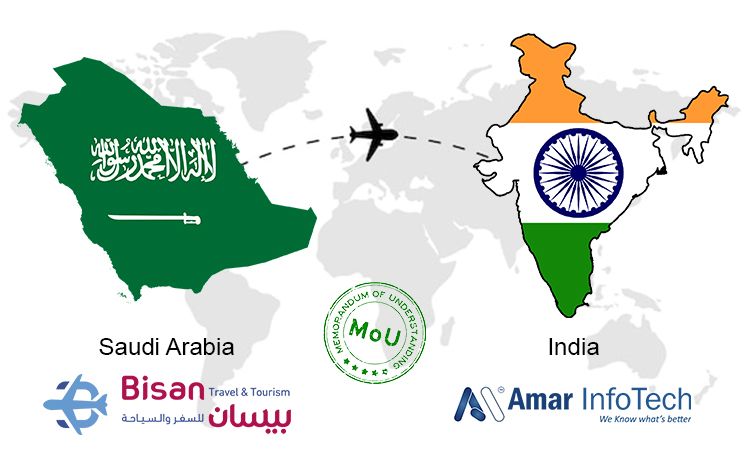
Travel Giant in Saudi Arabia Selects Amar Infotech for Digital Upgrade

From Idea to Reality: How to Plan Your Hotel Booking Portal the Smart Way

Top-notch Hotel API Provider Leading the Market from 2023 to 2025 (More)

5 Reasons Why Your Travel Agency Needs a Custom-Built Portal (More)
Services
Build Your Agile Team Today..
Inquiry Now