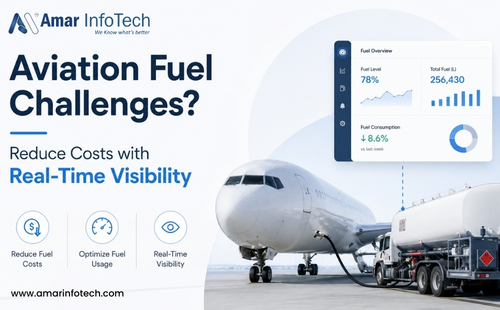




Fuel remains the single largest controllable expense for airlines and ground handling operators worldwide. As volatility in fuel prices continues to squeeze margins, organisations are under pressure to solve persistent aviation fuel challenges without compromising safety or service quality. The solution increasingly favoured by industry leaders is real-time fuel visibility, a technology-driven approach that transforms fragmented fuel data into actionable operational intelligence.
This article examines the core aviation fuel management problems facing the industry today, explores how real-time visibility solutions address them, and outlines the measurable business impact of adopting a connected fuel monitoring strategy.
Why Aviation Fuel Costs Are Under the Spotlight
According to the International Air Transport Association (IATA), fuel typically accounts for between 20% and 30% of an airline's total operating costs, depending on market conditions. Even marginal inefficiencies in fuel procurement, storage, or consumption can translate into millions of dollars in unnecessary expenditure across a fleet.
With airlines and ground service providers operating across multiple airports, time zones, and regulatory environments, manual fuel tracking methods are no longer sufficient. Organisations need accurate, instant insight into fuel uplift, consumption, and inventory to remain competitive and compliant.
Common Aviation Fuel Challenges Facing the Industry
Before evaluating solutions, it is important to understand the operational pain points that drive up costs and reduce efficiency across fuel supply chains.
1. Lack of Real-Time Fuel Data
Many ground operations still rely on manual logs, spreadsheets, or delayed system updates to record fuel uplift and consumption. This creates blind spots that prevent operations teams from identifying discrepancies until after a flight has departed.
2. Fuel Theft and Pilferage
Fuel theft remains a persistent concern at airports with limited monitoring infrastructure. Without continuous tracking, discrepancies between dispensed and billed fuel quantities can go unnoticed for extended periods.
3. Inefficient Fuel Procurement Planning
Procurement teams without access to consolidated, real-time consumption data often over-order or under-order fuel, leading to either excess storage costs or operational disruptions caused by shortages.
4. Compliance and Audit Complexity
Aviation fuel operations are subject to strict regulatory and safety standards. Manual record-keeping increases the risk of human error, making audits time-consuming and exposing operators to compliance penalties.
5. Disconnected Systems Across Stakeholders
Fuel data is frequently siloed across airlines, fuel suppliers, ground handlers, and airport authorities. This lack of integration delays decision-making and increases reconciliation overhead.
- Operational inefficiency: Delayed data leads to reactive, rather than proactive, decision-making.
- Revenue leakage: Undetected fuel discrepancies directly erode profit margins.
- Scalability issues: Manual processes cannot scale efficiently across multi-airport operations.
- Safety risk: Inaccurate fuel data can compromise flight planning accuracy.
How Real-Time Visibility Solves Aviation Fuel Challenges
Real-time fuel visibility platforms use connected sensors, IoT-enabled monitoring devices, and cloud-based dashboards to capture and transmit fuel data continuously. Rather than waiting for end-of-day reconciliation, operations teams gain immediate access to accurate fuel metrics from the point of delivery through to consumption.
A well-architected real-time fuel monitoring system typically includes the following components:
- IoT Sensors and Flow Meters: Capture precise fuel uplift and dispensing data at the source.
- Cloud-Based Dashboards: Consolidate data from multiple airports into a single, accessible interface.
- Automated Alerts: Flag discrepancies, leakages, or unusual consumption patterns instantly.
- Predictive Analytics: Forecast fuel demand based on historical and live operational data.
- Integration Layer: Connects fuel data with existing ERP, flight planning, and finance systems.
This architecture mirrors the approach used in broader IoT Development Services, where connected devices and real-time data pipelines are central to operational transformation across industries.
Key Benefits of Real-Time Fuel Visibility
Organisations that implement real-time visibility into their fuel operations report measurable improvements across cost, compliance, and efficiency metrics.
- Cost Reduction: Accurate, continuous monitoring minimises fuel wastage and unbilled discrepancies.
- Improved Accuracy: Automated data capture reduces human error in fuel logging and reconciliation.
- Faster Decision-Making: Operations and procurement teams can act on live data rather than delayed reports.
- Enhanced Compliance: Digital audit trails simplify regulatory reporting and reduce penalty risk.
- Theft Prevention: Continuous monitoring and automated alerts detect anomalies before they escalate.
- Centralised Visibility: A single dashboard view across multiple airports supports enterprise-wide oversight.
Gartner research consistently highlights that organisations leveraging real-time operational data outperform peers reliant on manual or delayed reporting, particularly in asset-intensive industries such as aviation and logistics.
Industry Use Case: Multi-Airport Fuel Operations
Consider a ground handling operator managing fuel logistics across several regional airports. Without real-time visibility, the finance team historically reconciled fuel consumption data weeks after each billing cycle, often uncovering discrepancies too late to recover losses.
By implementing a connected fuel monitoring platform, the operator achieved the following outcomes:
- Reduced fuel discrepancy losses by an estimated 25–30% [UNVERIFIED]
- Cut manual reconciliation time from days to hours
- Improved audit readiness through automated digital logs
- Enabled centralised fuel oversight across all airport locations from a single dashboard
While specific figures vary by operation size and existing infrastructure, the directional impact of real-time visibility on cost control is well documented across aviation and logistics sectors.
Building a Real-Time Fuel Visibility Solution: Technology Considerations
Implementing an effective fuel visibility platform requires careful selection of technology components suited to aviation-grade reliability and security requirements.
- Frontend: React or Angular-based dashboards for intuitive, role-based reporting.
- Backend: Node.js or .NET frameworks to handle high-frequency sensor data processing.
- Database: PostgreSQL or MongoDB for structured and time-series fuel data storage.
- Cloud Infrastructure: AWS, Microsoft Azure, or Google Cloud for scalable, secure hosting.
- IoT Layer: Industrial-grade flow meters and sensors with secure connectivity protocols.
This technology stack should also integrate seamlessly with existing enterprise systems, an area where robust Web Development and backend engineering capabilities are essential to long-term system reliability.
Amar Infotech's Expertise in Connected Operational Solutions
Amar Infotech brings extensive experience in building enterprise-grade, data-driven platforms for asset-intensive industries, including aviation, logistics, and manufacturing. Our engineering teams specialise in designing systems that convert fragmented operational data into real-time, actionable insight.
Our capabilities relevant to aviation fuel visibility solutions include:
- IoT Integration: Connecting sensors, flow meters, and edge devices to centralised platforms.
- Custom Dashboard Development: Building intuitive, role-based reporting interfaces for operations and finance teams.
- ERP and Systems Integration: Linking fuel data with existing enterprise resource planning tools.
- Cloud Architecture: Designing scalable, secure infrastructure for multi-location operations.
- AI-Driven Analytics: Applying predictive models to forecast consumption and flag anomalies.
With proven expertise across AI Development and Mobile App Development, Amar Infotech delivers end-to-end solutions tailored to the operational realities of aviation and ground handling businesses.
Conclusion: Turning Fuel Data into a Competitive Advantage
Persistent aviation fuel challenges can no longer be addressed through manual processes and delayed reporting. As fuel costs continue to represent a significant share of operating expenses, organisations that invest in real-time fuel visibility position themselves to reduce waste, strengthen compliance, and make faster, data-backed operational decisions.
By combining IoT sensors, cloud dashboards, and predictive analytics, aviation and ground handling operators can transform fuel management from a reactive cost centre into a controlled, transparent, and strategically optimised function.
Looking to build a real-time fuel visibility solution for your aviation operations? Contact Amar Infotech today to discuss your project requirements with our engineering team.
Recent Blog

White-Label Visa Website: Launch Your Visa Business in 2026

Amar Infotech Exclusive: 30 Days Free Trial on Visakix.ai

The Future of Visa Applications: Faster, Smarter & Fully Digital

The 3-Minute Visa Process: Is This the Future of Immigration Services? (More)

How to Start a Visa Business Online Using AI in 2026 (More)
Services
Build Your Agile Team Today..
Inquiry Now