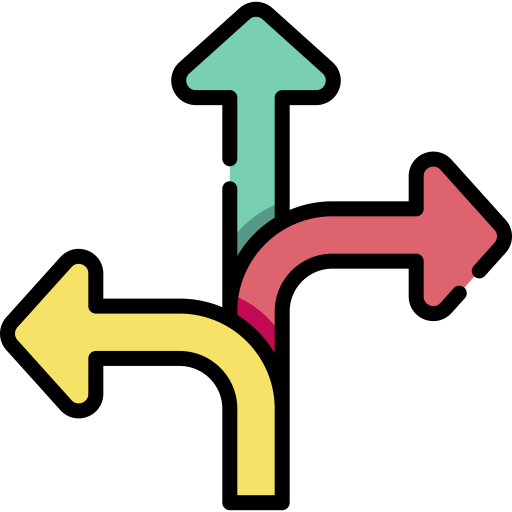

Every growing organisation eventually faces the same decision: build a tailored system or subscribe to a ready-made platform. The custom software vs SaaS debate has become one of the most searched technology questions among CTOs, founders, and operations leaders, and for good reason. The choice directly affects budget, scalability, data ownership, and long-term competitive advantage.
According to Gartner, global spending on enterprise software is projected to exceed USD 1.13 trillion in 2026, with a growing share allocated to bespoke platforms as businesses seek differentiation beyond what off-the-shelf tools can offer [UNVERIFIED]. This article breaks down both models in practical terms, so you can make a confident, business-aligned decision rather than a purely technical one.
Quick Snapshot: Custom Software vs SaaS at a Glance
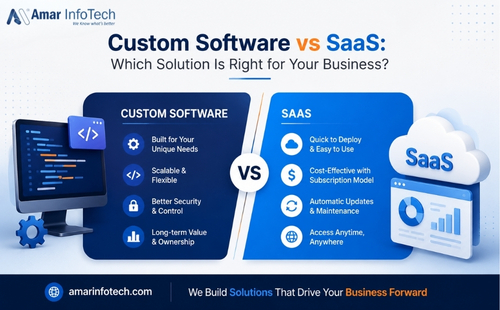
- Custom software is built specifically for your workflows, data structures, and growth plans.
- SaaS (Software as a Service) is a subscription-based, multi-tenant platform shared across many customers.
- Custom software favours long-term control and scalability; SaaS favours speed and lower upfront cost.
- The right answer depends on your industry, growth stage, and operational complexity.
Why This Decision Matters More Than Ever in 2026
Businesses are no longer comparing software purely on price. They are evaluating how a platform affects customer experience, compliance, and the ability to integrate emerging technologies such as AI and IoT. A McKinsey study notes that organisations with technology stacks aligned to their specific operating model report materially higher productivity gains than those relying solely on generic platforms [UNVERIFIED].
This shift has pushed mid-sized and enterprise businesses to revisit the custom software vs SaaS question at least once during their growth cycle, particularly when off-the-shelf tools begin to limit operational flexibility.
What Is SaaS Software?
SaaS refers to cloud-hosted applications licensed on a subscription basis. The vendor manages infrastructure, updates, and security, while customers access the software through a browser or app. Common examples include CRM tools, accounting platforms, and HR management systems.
Core Characteristics of SaaS
- Shared Infrastructure: Multiple customers use the same underlying codebase.
- Subscription Pricing: Monthly or annual fees replace large upfront investment.
- Vendor-Managed Updates: Patches and features are pushed automatically.
- Limited Customisation: Configuration options exist, but core logic cannot be altered.
What Is Custom Software Development?
Custom software is purpose-built for a single organisation. It is designed around specific workflows, data ownership requirements, and integration needs, rather than a generic audience.
Core Characteristics of Custom Software
- Tailored Architecture: Built around your exact business logic and processes.
- Full Code Ownership: The business controls the source code and roadmap.
- Deep Integration Capability: Connects seamlessly with ERP, IoT, or legacy systems.
- Scalable by Design: Architecture can be extended as the business grows.
Custom Software vs SaaS: Detailed Comparison
1. Cost Structure
SaaS typically requires low upfront investment, making it attractive for startups and small teams. However, subscription costs compound over time, particularly as user counts and feature tiers increase.
Custom software vs SaaS cost comparisons usually show higher initial development cost for custom builds, but no recurring licence fees and lower long-term cost-per-user once the platform scales across the organisation.
2. Scalability and Flexibility
- SaaS: Scales easily for standard use cases but is constrained by the vendor's feature roadmap.
- Custom Software: Scales precisely to operational needs, including unique workflows SaaS platforms do not support.
3. Data Security and Compliance
Industries such as healthcare, finance, and logistics often face strict regulatory requirements. Custom enterprise software allows businesses to control data residency, encryption standards, and audit trails directly, which is critical for sectors governed by frameworks such as HIPAA or GDPR.
SaaS providers generally maintain strong security certifications (such as SOC 2 or ISO 27001), but businesses share infrastructure with other tenants, which can be a limiting factor for highly regulated environments.
4. Integration With Existing Systems
Legacy ERP systems, IoT devices, and proprietary databases are common in established enterprises. Custom platforms can be engineered for deep, native integration, while SaaS tools rely on APIs and pre-built connectors that may not cover edge-case workflows.
5. Time to Deployment
SaaS wins decisively here. A subscription can be activated within days. Custom software, by contrast, requires a structured development lifecycle spanning discovery, design, build, and testing, typically over several months.
6. Ownership and Long-Term Control
With SaaS, the business is dependent on the vendor's pricing changes, feature deprecations, and platform direction. Custom software ensures full ownership, meaning the roadmap is dictated entirely by business needs rather than a third-party vendor.
When SaaS Is the Better Fit
- Early-stage startups validating a business model.
- Standard operational needs such as accounting, email marketing, or basic CRM.
- Limited internal IT resources for managing infrastructure.
- Budget constraints that rule out large upfront investment.
When Custom Software Is the Better Fit
- Complex, non-standard workflows that off-the-shelf tools cannot support.
- Regulatory environments demanding strict data control.
- Plans to integrate AI, IoT, or advanced automation into core operations.
- Long-term scalability where licence costs would outweigh build costs.
- A need for competitive differentiation through proprietary technology.
How Amar Infotech Helps Businesses Decide and Build
With over 15 years of enterprise software experience, Amar Infotech has delivered 500+ projects across industries including logistics, healthcare, retail, and manufacturing. Our teams specialise in building scalable, secure systems using modern technology stacks, including:
- Frontend: React, Angular
- Backend: Node.js, .NET
- Database: PostgreSQL, MongoDB
- Cloud: AWS, Azure, Google Cloud
- Emerging Tech: AI Development and IoT Application Development
We have helped clients reduce manual reporting time by up to 80% and improve operational visibility through custom-built enterprise platforms [UNVERIFIED]. Whether you need a fully bespoke ERP system, a customer-facing mobile application, or a scalable web platform, our development approach is built around measurable business outcomes.
Making the Final Decision: A Practical Framework
Ask these questions before choosing between custom software vs SaaS:
- Does an existing SaaS tool cover 80% or more of your required workflows?
- Will your data volume or user base grow significantly within 2–3 years?
- Are you operating in a regulated industry with strict compliance needs?
- Do you require deep integration with IoT, AI, or legacy systems?
- Is proprietary technology part of your competitive strategy?
If you answered "yes" to two or more of the last four questions, custom software is likely the stronger long-term investment.
Final Thoughts
There is no universally correct answer in the custom software vs SaaS decision. SaaS suits businesses prioritising speed and simplicity, while custom software suits organisations that need control, scalability, and deep integration as they grow. The right choice depends on your specific operational complexity, compliance needs, and long-term technology strategy.
Looking to build a scalable, secure software solution tailored to your business? Contact Amar Infotech today to discuss your project requirements with our enterprise software experts.
Recent Blog

Services
Build Your Agile Team Today..
Inquiry Now