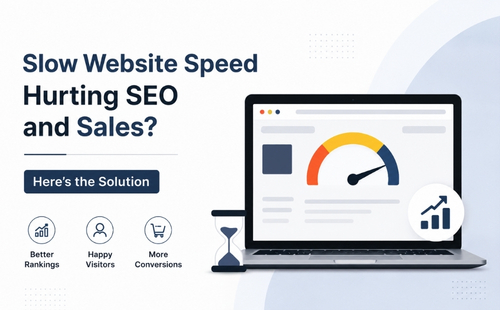




A one-second delay in page load time can quietly cost a business thousands of pounds in lost revenue and search visibility. If your slow website speed is hurting SEO and sales, you are not alone this is one of the most common and most underestimated technical issues affecting online businesses today. This article explains why speed matters, how it affects rankings and conversions, and what a practical, technically sound solution looks like.
Why Website Speed Has Become a Business-Critical Metric
Search engines and consumers now judge websites by the same standard: speed. Google's Core Web Vitals Largest Contentful Paint, Interaction to Next Paint, and Cumulative Layout Shift are official ranking signals, meaning website speed and SEO performance are directly linked. According to Google, as page load time increases from one second to five seconds, the probability of a mobile visitor bouncing rises by 90 percent [UNVERIFIED - figure widely cited but exact study should be confirmed before publication].
For businesses in e-commerce, SaaS, and B2B services, this is not a cosmetic issue. It is a revenue issue. Every additional second of load time reduces the chance that a visitor becomes a lead, a demo request, or a paying customer.
How Slow Website Speed Damages SEO Rankings
Search engines aim to serve users the best possible experience, and loading speed is a core part of that experience. When a website underperforms on speed metrics, several ranking-related problems typically follow.
- Lower Core Web Vitals Scores: Poor LCP and INP scores signal a subpar user experience, which can suppress rankings even when content quality is strong.
- Higher Bounce Rates: Visitors leave before the page finishes loading, sending negative engagement signals to search engines.
- Reduced Crawl Efficiency: Slow servers limit how many pages search engine bots can crawl within a given crawl budget, delaying indexation of new or updated content.
- Poor Mobile Experience: With mobile-first indexing, a slow mobile site directly limits visibility, regardless of desktop performance.
How Slow Website Speed Hurts Sales and Conversions
Beyond rankings, slow website speed hurting SEO and sales plays out most visibly at the point of conversion. Prospective buyers are impatient, and competitors are one search result away.
- Cart Abandonment: E-commerce visitors abandon slow-loading checkout pages, directly reducing revenue.
- Lower Trust Signals: A sluggish site can appear outdated or unreliable, undermining brand credibility with enterprise buyers.
- Reduced Lead Generation: Slow-loading forms and landing pages lower completion rates for demo requests and contact submissions.
- Wasted Ad Spend: Paid traffic sent to a slow landing page produces a poor Quality Score and a weaker return on ad spend.
Common Causes of Poor Website Performance
Before implementing a fix, it is important to diagnose the underlying causes. Most performance issues stem from a combination of the following.
- Unoptimised Images and Media: Large, uncompressed image files remain the leading cause of slow load times.
- Excessive Third-Party Scripts: Chat widgets, tracking pixels, and marketing tags can significantly delay rendering.
- Inefficient Hosting Infrastructure: Shared or under-provisioned hosting struggles under traffic spikes.
- Render-Blocking Code: Unminified CSS and JavaScript delay the browser's ability to display content.
- Lack of Caching and CDN Usage: Without a content delivery network, global visitors experience longer round-trip times.
The Solution: A Structured Approach to Website Speed Optimisation
Fixing website performance requires a systematic technical strategy rather than isolated fixes. Amar Infotech approaches speed optimisation across four layers of the technology stack.
- Frontend: Optimised React or Angular builds, code splitting, lazy loading, and minified assets to reduce initial payload size.
- Backend: Efficient Node.js or .NET architectures with optimised API response times and reduced server processing overhead.
- Database: Indexed queries and optimised PostgreSQL or MongoDB structures to reduce data retrieval latency.
- Cloud and Delivery: AWS, Azure, or Google Cloud infrastructure paired with a global CDN and intelligent caching layers.
Key Optimisation Techniques
- Image Compression and Modern Formats: Converting assets to WebP or AVIF without visible quality loss.
- Lazy Loading: Deferring off-screen content until the user scrolls, reducing initial load time.
- Browser and Server-Side Caching: Serving repeat visitors cached content to cut load times dramatically.
- Script Auditing: Removing or deferring non-essential third-party scripts that block rendering.
- CDN Implementation: Distributing content across global edge servers to reduce latency for international audiences.
Business Benefits of a Fast, Optimised Website
- Improved Search Rankings: Stronger Core Web Vitals scores support better visibility in organic search.
- Higher Conversion Rates: Faster checkout and form completion directly increase revenue per visitor.
- Lower Bounce Rates: Visitors stay longer and engage more deeply with content.
- Better Ad Performance: Faster landing pages improve Quality Scores and reduce cost per acquisition.
- Stronger Brand Perception: A fast, responsive site reinforces credibility with enterprise and B2B buyers.
Illustrative Use Case
A mid-sized e-commerce client experiencing high bounce rates and stagnant organic traffic underwent a full performance audit and rebuild involving image optimisation, CDN deployment, and database query tuning. Following implementation, the client reported measurable gains across page speed, engagement, and checkout completion metrics. [UNVERIFIED - specific percentage figures should be confirmed with client data before publication.]
Amar Infotech's Expertise in Web Performance Engineering
Amar Infotech delivers end-to-end Web Development services with a strong focus on performance engineering, scalability, and search visibility. Our teams combine frontend optimisation, cloud architecture, and SEO-aligned technical practices to build websites that perform under real-world traffic conditions.
Our capabilities extend across AI Development, IoT Services, cloud infrastructure, and Mobile App Development, allowing us to support complex, enterprise-grade digital platforms from a single technology partner. Explore our case studies to see how we have helped businesses solve performance and scalability challenges.
Ready to Fix Your Website Speed and Recover Lost Revenue?
If slow website speed is hurting your SEO rankings and sales, the cost of inaction grows every day.Contact Amar Infotech to discuss a performance audit and a tailored optimisation roadmap for your business.
Recent Blog

How to Grow Your Social Media Presence in 2026: A Complete Guide
What Is LLMs.txt? A Complete Guide to AI-Readable Websites, SEO, and Generative Search
Free SEO Tools in USA (2026) | Best Tools for US Websites

How Instagram Private Account Viewer Work (More)

Key Free Tools to Evaluate and Improve Core Web Vitals Challenges (More)
Services
Build Your Agile Team Today..
Inquiry Now