


In an era of rapid technological shifts and evolving market demands, a company's greatest competitive advantage is its people. Organizations can no longer rely on static training models to keep pace with industry changes. Fostering a culture of continuous learning has become an absolute operational necessity to retain top talent and drive innovation.
Designing an effective training framework from scratch is a massive undertaking. Many internal human resources teams find themselves stretched incredibly thin while balancing daily operations with complex organizational shifts, a dynamic frequently highlighted in recent Gartner research on top HR priorities. Recognizing when to bring in specialized external expertise is often the defining difference between a training program that falls flat and one that genuinely transforms a workforce.

Before searching for an external partner, you must pinpoint your exact organizational roadblocks. Are you trying to fix a skill gap, prepare managers for leadership roles, or overhaul your onboarding processes? Clear objectives give you a concrete benchmark to measure potential providers against. This preparation ensures you avoid generic programs.
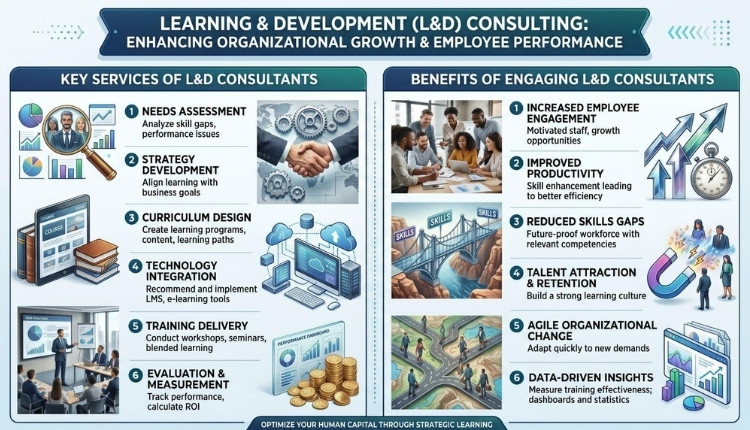
After mapping out your core organizational goals, focus your search on how the investment will directly uplift your employees. Choosing the right L&D Consulting Services guarantees your workforce receives highly individualized learning experiences rather than rigid, one-size-fits-all modules. An experienced provider will conduct a deep dive into your operational workflows to construct learning paths that elevate skill mastery and fit seamlessly into everyday business activities.
Prioritize Cultural Alignment and Customization
A consulting firm might have impressive credentials, but if their style clashes with your corporate culture, the initiative will face internal resistance. The right partner should feel like an extension of your team. They need to collaborate with your stakeholders, listen to employees, and adapt to your values.
Customization is non-negotiable because every workforce possesses distinct learning preferences. According to the Society for Human Resource Management, modern corporate training must respect adult learning principles. This means offering practical knowledge rather than abstract theories. For instance, seamlessly integrating a customized Training Management System into existing workflows is critical for widespread user adoption.
Evaluate Delivery Methodologies and Technology
The mechanism of delivery matters as much as the content itself. In today's hybrid work environments, a modern learning strategy should combine the best of both worlds through blended learning frameworks. This approach pairs interactive classroom sessions with self-paced digital modules to accommodate different learning speeds.
As highlighted by the Harvard Business Review, learning should not be treated as an isolated event. It must be an ongoing journey embedded into daily work habits. Ensure your consulting partner leverages modern learning management platforms, microlearning modules, and engaging multimedia tools to keep teams motivated.

Tie Learning Initiatives to Measurable Outcomes
An effective training strategy must deliver a tangible return on investment. A reputable consulting firm will help you establish clear success metrics and specific L&D KPIs before the first session begins. This process moves the conversation away from basic metrics like attendance and focuses on behavioral changes.
To track success accurately, organizations must evaluate these L&D KPIs continuously. These key performance indicators link your educational initiatives directly to critical business outcomes. Examples include improved employee retention rates, increased operational efficiency, reduced error rates, and heightened customer satisfaction scores.
Conclusion
Choosing an educational partner is a significant strategic commitment to your company's future growth and stability. By taking a highly methodical approach, you can confidently select a vendor that drives lasting positive behavior change across all departments. You must carefully define clear internal goals, strongly insist on cultural alignment, demand customized delivery methods, and consistently track real business outcomes. Ultimately, the right collaboration empowers your teams, builds critical operational resilience, and sets your business up for sustained success in an increasingly competitive global marketplace.
Recent Blog
The Smart Business Guide to Razorpay Payment Gateway Integration
The Complete Guide to PayU Payment Gateway Integration for Modern Businesses
How Amar Infotech Is Helping Businesses Stay Ahead in the Web 4.0 Era
PhonePe PG Payment Gateway Integration complete guide (More)
Top 7 Digital Marketing Trends, Strategies For Your Business (More)
Services
Build Your Agile Team Today..
Inquiry Now